
Economist Arvind Panagariya tells Suman Guha Mozumder that the rupee is doing a much-needed clean-up job, raising exports and cutting imports. And it must be allowed to do so.

Arvind Panagariya, sherpa for India at the summit, tweeted about the "interaction".

In December, govt had lowered its growth forecast for 2015-16 to 7-7.5%

NITI Aayog vice-chairman advises states to follow Tamil Nadu model for framing land acqisition laws
This kind of growth will turn India into a $8 trillion economy.

"Demonetisation sends a very, very strong signal that the days when the central government was complacent are over. If you misbehave, it will be seen that you pay for it," Panagariya said.
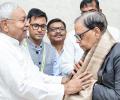
Bihar Chief Minister Nitish Kumar launched a scathing attack on his predecessor Rabri Devi, calling her appointment as Chief Minister "suspension-induced" during a heated debate in the state legislative council. The verbal sparring, marked by accusations and counter-accusations on law and order, saw Kumar accusing the RJD of being unable to handle Hindu-Muslim tensions and engaging in "mischief." Rabri Devi, in response, asserted her right to speak about her achievements during her tenure as Chief Minister. Kumar, however, retorted with a sharp, local phrase, dismissing Rabri Devi's claims. The exchange, which saw both sides engage in mudslinging, ended with the Chairman admonishing the opposition for their unruly behavior.
India should take 'measured approach' with stimulus packages to deal with COVID-19 by limiting interventions to the provision of food, shelter and basic necessities of life for all; forbearance on payments of outstanding loans; and extra provision of working capital including what will be necessary to cover outstanding wages from lockdown period to enterprises.

Out of the total amount, Rs 17,359.77 crore is aircraft loan, while Rs 31,517.04 crore is working capital loan.
At its last policy review, the central bank left policy repo rates on hold at 7.25 percent, tying future cuts to inflation outlook.
It raises three major questions - the incentive compatibility issue, the fairness issue and fiscal challenge, said Panagariya.
Arvind Panagariya is widely expected to take a top advisory role in prime minister-elect Narendra Modi's government.

The demographics favour India, as it is a relatively young country with more working people than anywhere else
Will India really beat China in future or if not beat, can it at least catch up with it? We asked common people to speak on the issue and came across some interesting viewpoints.

The government on Friday appointed Suman K Bery as the vice chairman of Niti Aayog, following the sudden resignation of Rajiv Kumar.
Vasundhara Raje is pioneering the 'Rajasthan Model', which places policy reform at the centre of the development strategy.
India is capable of achieving and sustaining double-digit growth in the coming years if labour reforms are carried out to shift workforce from agriculture to the industry, eminent economist Arvind Panagariya said on Friday.
Arvind Panagariya's recent book, though remarkable, has been one-sided in some respects.
.jpg)
Eminent free market economist Arvind Panagariya has been appointed to run Indian Prime Minister Narendra Modi's new Policy Commission, set up to modernise economic strategy after decades of Soviet-style central planning.
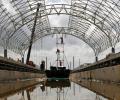
On the back of ongoing reforms and stress on manufacturing, India. he said, can look for much bigger share in global exports.
Today, with growth having slowed and macro-economic challenges in every direction, would the government have benefited from the advice of 'Harvard' economists? asks T N Ninan.
Along with the Finance Minister, the country looks up to RBI Governor in times of crisis. Among the last five chiefs, who have lived up to the people's expectations? Find out...
Investment in human capital is likely to fail to translate into effective growth if incentives for entrepreneurs are missing.
Arvind Panagariya explains why his suggestion of the fiscal deficit at 4.5% of GDP differs from P Chidambaram's 4.1% in the interim Budget.
Interview with Arvind Panagariya, Jagdish Bhagwati Professor of Indian Political Economy at Columbia University.
What will it take the next government to revive growth? Arvind Panagariya, Jagdish Bhagwati Professor of Indian Political Economy at Columbia University, and one of the world's leading economists, offers a checklist.
For his distinguished academic accomplishments, Arvind Panagariya was among the Indian Americans awarded with the Padma Bhushan by the Government of India this Republic Day. Arthur J Pais spoke to the economist about his amazing life story --from improverished childhood in Jaipur to the hallowed portals of Columbia University in New York.

Former Niti Aayog Vice Chairman Arvind Panagariya has opined that cutting trade with Beijing at this juncture would amount to sacrificing India's potential economic growth.
Noted economist Arvind Panagariya says India is an emerging power. With liberalisation, Indian entrepreneurs have emerged and they are top class.
The 'poor' also own TVs and two-wheelers and no discussion of poverty is complete unless it acknowledges this.

Vice-Chairman Arvind Panagariya said that India is facing a health crisis that has led to a sudden stop of the economy.

The government also appointed Dr Vinod Paul, a pediatrician at the AIIMS, as a member of the NITI Aayog

Panagariya has advocated a more liberalised spending, arguing that greater capital expenditure could relax some of the infrastructure bottlenecks facing the country.

The days of anti-reform, anti-growth advisers that undermined our economy in the UPA-II years will now be strictly behind us: Bhagwati

The proposed bullet train will run between Mumbai and Ahmedabad.

Economist Arvind Panagariya tells Suman Guha Mozumder that the rupee is doing a much-needed clean-up job, raising exports and cutting imports.

'We don't have to go abroad for anything.' 'Anyone who thinks we have a lot to learn from the US needs to have his head examined.' 'We are in a new era.'
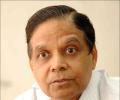
Status to enable Arvind Panagariya to attend Cabinet meetings.

The NITI Aayog's vice-chairman's charge holds ground.
Claims of a spike in poverty and inequality in India during the Covid-19 pandemic are patently false as such claims are based on uncomparable different surveys, according to a paper co-authored by eminent economist Arvind Panagariya. The paper also noted that inequality fell in the country during Covid years, both in rural and urban areas as well as nationally. Panagariya, Columbia University Professor and former vice chairman of NITI Aayog and Vishal More of Intelink Advisors, New Delhi have co-authored a detailed paper 'Poverty and Inequality in India: Before and After Covid-19'.
